
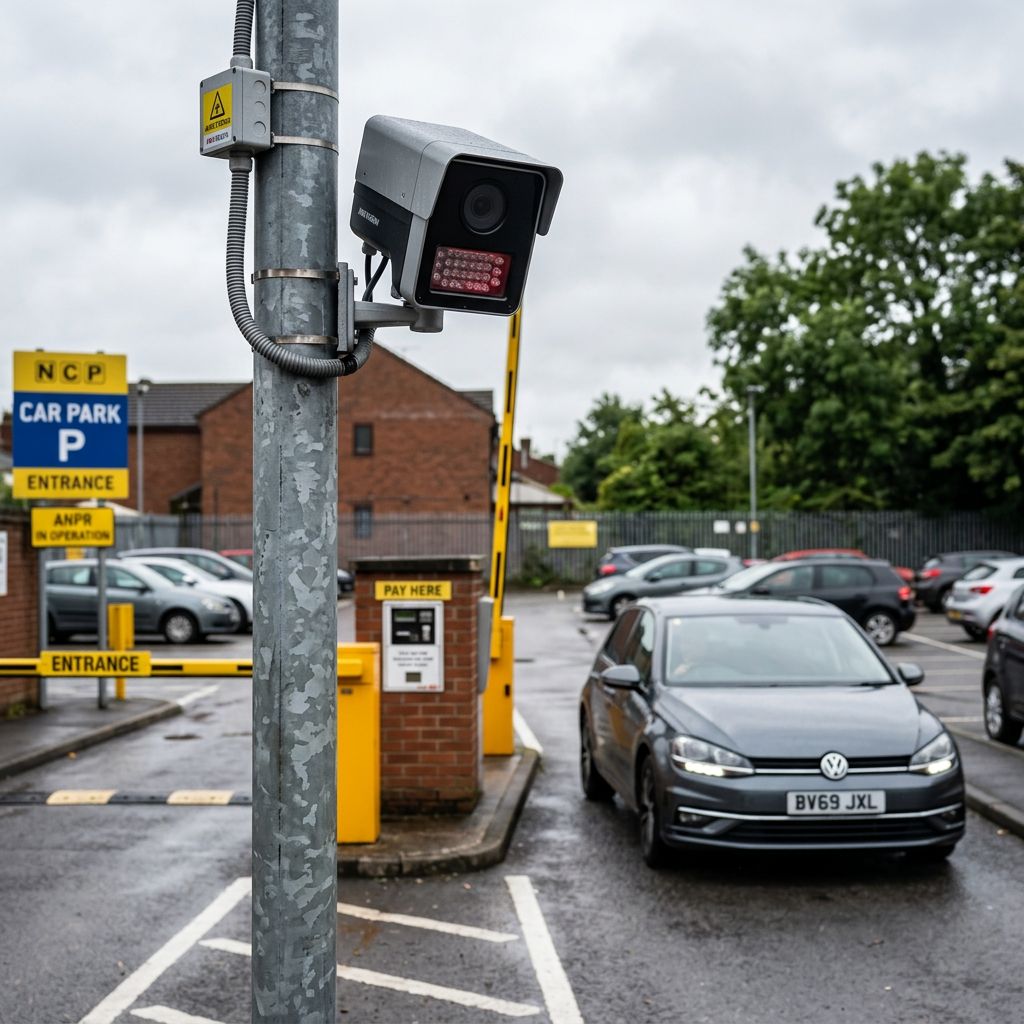
Automatic Number Plate Recognition (ANPR) is a camera technology that reads vehicle number plates using optical character recognition (OCR), matches them against a database, and triggers an action — such as opening a barrier — in under two seconds, with no tag, ticket, or driver action required. It is the technology behind the cameras at car park entrances, gated business parks, and police vehicles across the UK.
At Nortech, we supply and support ANPR systems through our ANPR Lumo camera range. We have deployed ANPR at logistics depots, residential estates, hospital car parks, and commercial sites throughout the UK. This guide covers what ANPR means, how the technology works, what it checks for, what a system costs, and how it compares to alternatives like long-range RFID.
What Does ANPR Stand For?
ANPR stands for Automatic Number Plate Recognition. It is a technology that uses specialised cameras and optical character recognition (OCR) software to read vehicle registration plates automatically. The system captures an image, extracts the plate characters, and compares them against a database to identify or verify vehicles in real time.
The technology was invented in the UK in 1976 at the Police Scientific Development Branch. The first prototype was working by 1979, and the first arrest using ANPR evidence came in 1981. Since then, ANPR has expanded well beyond policing into commercial access control, parking management, and toll collection.
In the United States and Canada, the same technology is called ALPR (Automatic License Plate Recognition). You may also see it referred to as LPR (License Plate Recognition) or simply number plate recognition.
How Does ANPR Work?
An ANPR system works through a series of automated steps that happen within milliseconds as a vehicle approaches a camera:
-
Image capture — A high-definition infrared camera illuminates and photographs the vehicle’s number plate. Built-in IR illumination means the camera works in complete darkness without any visible flash. High-end models capture plates on vehicles travelling at up to 240 km/h.
-
Plate localisation — The software identifies exactly where the number plate sits within the captured image, isolating it from the vehicle body, background scenery, and visual noise.
-
Image processing — The system adjusts brightness, contrast, and orientation to normalise the plate image for consistent reading, regardless of angle, distance, or weather.
-
Character segmentation — Individual characters on the plate are separated so each letter and number can be analysed independently.
-
Optical character recognition (OCR) — Each character is processed and converted into machine-readable text. The system cross-references patterns against known plate formats from different countries and regions.
-
Database comparison — The recognised plate number is compared against a database of authorised, flagged, or known vehicles. The system determines whether to grant or deny access based on stored permissions.
-
Action — If access is verified, the controller sends a signal to open the barrier or gate. If denied, the system can trigger an alert, log the event, or display a message. The entire process from image capture to barrier opening typically takes under two seconds.
ANPR cameras transmit data in standard Wiegand format, allowing them to integrate with most existing access control panels and management software.
What Does ANPR Check For?
What an ANPR camera checks depends on who operates it and what database sits behind it. The camera itself simply reads the number plate characters. The system behind it decides what to do with that information.
Police and law enforcement ANPR systems check plates against the Police National Computer (PNC). They flag vehicles that are stolen, uninsured, untaxed, linked to a wanted person, or associated with serious crime. UK police operate around 13,000 ANPR cameras that collectively process roughly 60 million plate reads per day, according to police.uk. That data is stored for up to one year in the National ANPR Data Centre.
Commercial and private ANPR systems check plates against a site-specific database. A business park might check whether a vehicle belongs to a registered employee. A hospital car park checks whether a vehicle has a valid parking permit. A gated residential estate checks whether the plate matches a resident or pre-authorised visitor.
In both cases, the ANPR camera reads the plate. The database and rules behind it determine what gets flagged or actioned.
What Triggers an ANPR Camera?
ANPR cameras are triggered by vehicle movement within their field of view. Most systems use one of three trigger methods:
- Continuous capture — The camera continuously scans its field of view and processes every plate that appears. This is common on police vehicles and motorway installations.
- Inductive loop trigger — A wire loop buried in the road surface detects a vehicle passing over it and signals the camera to capture. This is standard for barrier and gate installations.
- Video motion detection — The camera’s built-in software detects movement in a defined zone and triggers a capture. This works well for lower-traffic sites.
For commercial access control, inductive loop triggers are the most reliable because they only fire when a vehicle is physically present in the capture zone, reducing false reads from passing traffic or pedestrians.
What Does an ANPR System Include?
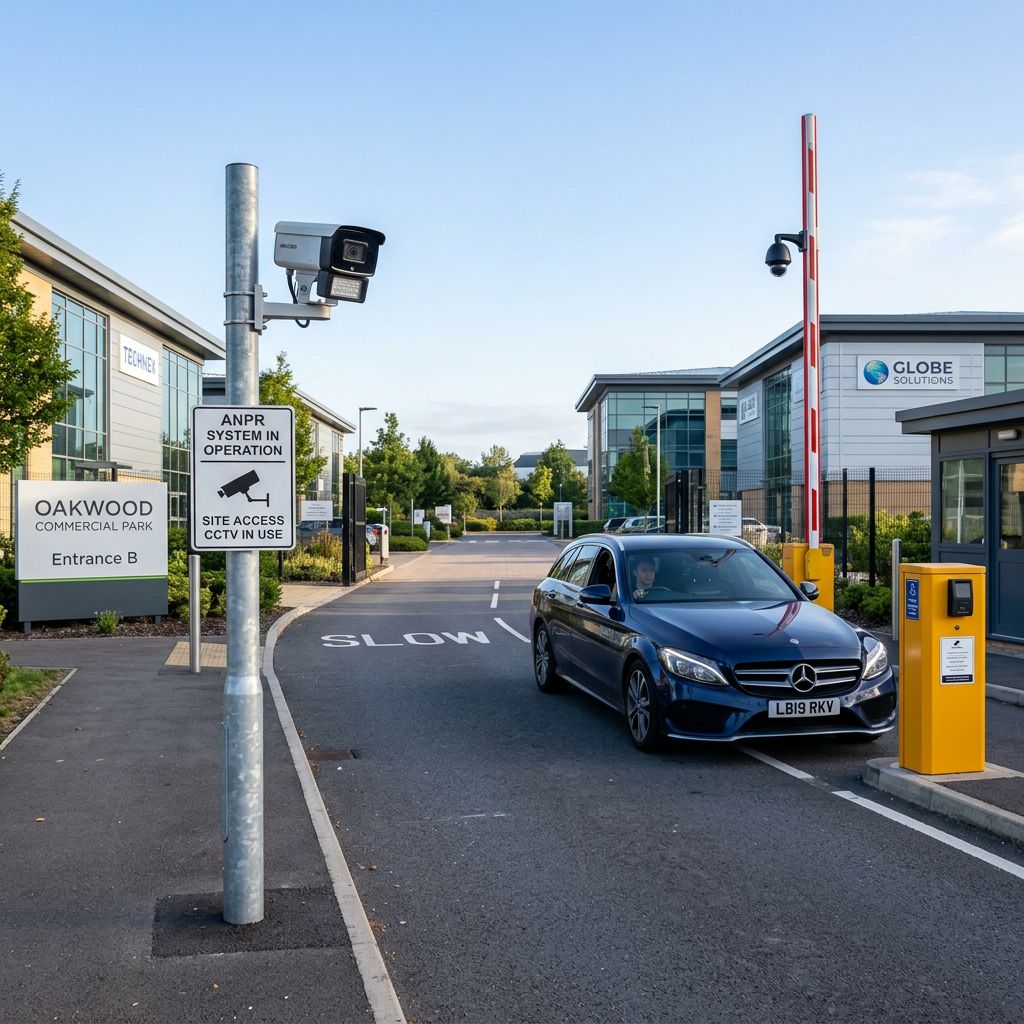
A complete ANPR installation consists of several integrated components:
ANPR camera
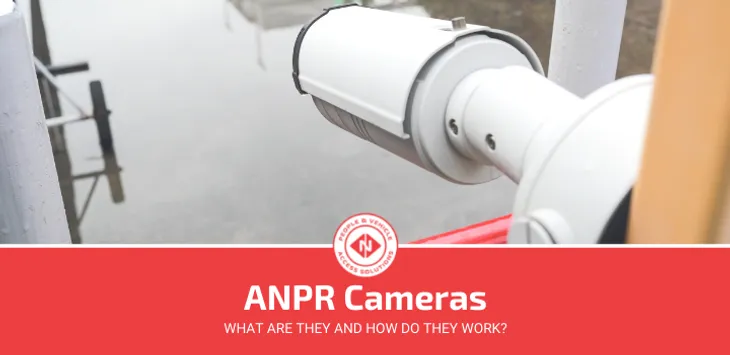
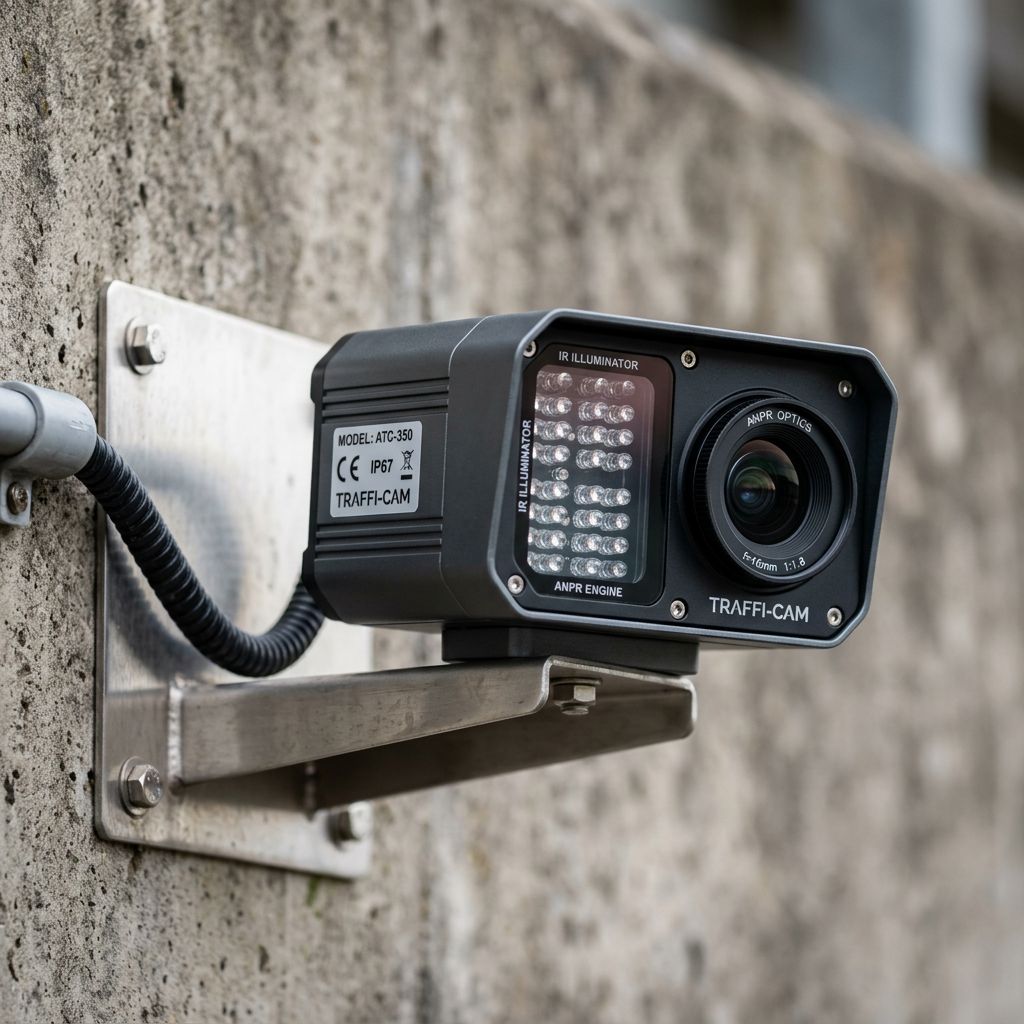
The camera is the front end of the system. Unlike standard CCTV cameras, dedicated ANPR cameras are purpose-built with infrared illumination, high-resolution sensors, and embedded processing designed specifically for plate recognition. They are weatherproof (rated IP66 or higher) and designed for outdoor mounting at entry and exit points. Nortech’s ANPR Lumo is an all-in-one unit that combines camera, analyser, and illuminator in a single housing with a 2-10m read range.
Processing software
ANPR software converts raw camera images into actionable data. It handles OCR processing, database management, and decision-making. Modern ANPR software can run on a local server or in the cloud, and typically provides real-time monitoring dashboards, event logging, and reporting.
Vehicle database
A database of authorised vehicle registration numbers is maintained by the system administrator. This can include employee vehicles, resident permits, pre-booked visitors, VIP access lists, and flagged vehicles. Most systems allow bulk import and straightforward management of records.
Physical access points
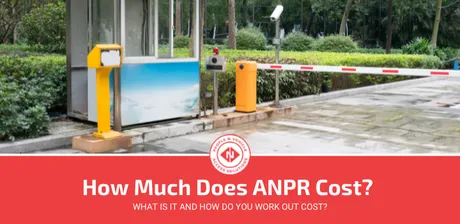
Barriers, gates, bollards, or other physical entry controls are triggered by the access controller when a recognised vehicle is detected. These range from simple arm barriers to full-height security gates depending on the security level required.
Access controller
The controller sits between the ANPR software and the physical barrier. It receives the authorisation signal and sends the command to open or close the barrier. It also manages additional logic such as time-based access rules, zone restrictions, and anti-passback controls.
Network infrastructure
The camera, server, and controller communicate via a wired network (Ethernet or fibre) for fixed installations, or wireless (Wi-Fi or 4G/5G) for remote or temporary sites.
ANPR Camera Types and Specifications
Not all ANPR cameras are the same. Choosing the right type depends on your site requirements and budget.
Dedicated ANPR cameras
These are purpose-built cameras with an embedded OCR engine that processes plate recognition directly on the camera. They operate as standalone units: no external server is needed for recognition, only for database management and reporting. Dedicated cameras have a higher upfront cost but offer better reliability, faster processing, and lower ongoing infrastructure requirements.
Video cameras with LPR software
Standard CCTV or IP cameras can be paired with server-based License Plate Recognition (LPR) software. The camera streams video to a server where software performs the OCR processing. This approach has a lower camera cost but requires a dedicated server, ongoing software licensing, and a reliable network connection.
Key specifications to consider
| Specification | What it means | Typical range |
|---|---|---|
| Read speed | Maximum vehicle speed for reliable capture | 30-240 km/h |
| Read distance | Effective range for plate reading | 2-25 metres |
| Accuracy rate | Percentage of correctly read plates | 95-99%+ |
| Weather resistance | Ingress protection rating | IP66 or IP67 |
| IR illumination | Infrared LEDs for night operation | Built-in on dedicated units |
| Integration output | Data format for access control panels | Wiegand, TCP/IP, or OSDP |
For detailed pricing across these options, see our ANPR system cost guide.
What Is the Difference Between ANPR and RFID?
This is one of the most common questions site managers ask when choosing a vehicle identification system. Both technologies automate vehicle access, but they work in fundamentally different ways.
| Feature | ANPR | Long-range RFID |
|---|---|---|
| How it identifies vehicles | Reads the number plate (no tag needed) | Reads an RFID tag fitted to the vehicle |
| Tag/credential required | No, the plate is the credential | Yes, each vehicle needs a UHF tag |
| Read range | 2-25 metres | Up to 10 metres (Nedap uPASS Go) |
| Vehicle speed | Up to 240 km/h | Up to 200 km/h (125 mph) |
| Accuracy | 95-99% (affected by dirty/damaged plates) | 99.9%+ (tag is either read or not) |
| Ongoing admin | None per vehicle (plates are already fitted) | Tags must be issued, tracked, and replaced |
| Visitor handling | Easy: add a registration to the database | Harder: visitor needs a temporary tag |
| Cost per lane | From ~£7,000 | From ~£3,000 (reader + tags) |
| Best for | High visitor turnover, car parks, multi-tenant sites | Consistent fleets, logistics, high-security sites |
Many sites use both. ANPR handles visitors and general parking, while RFID provides guaranteed identification for staff vehicles or secure zones. For a full comparison, see our guide on long-range RFID vs ANPR.
ANPR Applications
Automatic number plate recognition is used across a wide range of industries and environments:
Commercial and industrial sites
Offices, business parks, warehouses, and logistics hubs use ANPR to automate employee vehicle access and manage visitor entry without manned gatehouses or physical tags. Once a staff member’s registration is added to the system, their vehicle is recognised automatically every time they arrive.
Car parks
ANPR manages entry, exit, and payment in both public multi-storey car parks and private employee parking. Cameras at entry and exit points log every vehicle, enabling automated enforcement, overstay detection, and ticketless parking. For more on keeping car parks secure, see our guide to car park security.
Hospitals and education
Hospitals, universities, and schools use ANPR to manage limited parking capacity and secure site perimeters. The technology is particularly valuable at hospitals where parking congestion directly affects patient access and emergency vehicle flow.
Residential and gated communities
ANPR replaces vehicle tags in gated residential estates and apartment complexes, providing frictionless access for residents and controlled visitor entry. Temporary visitor access can be granted by adding a registration for a set period.
Logistics and distribution
Haulage depots and distribution centres use ANPR to automate goods-in and goods-out tracking, ensuring only authorised vehicles access loading bays. The system logs arrival and departure times for compliance and scheduling.
Law enforcement
Police forces across the UK use ANPR as a major tool for detecting vehicles linked to crime, locating stolen vehicles, and enforcing road tax and insurance requirements. ANPR evidence has been used in criminal investigations since the early 1980s.
ANPR and Smart Parking
ANPR is transforming car park management by enabling fully automated, ticketless parking. By integrating with parking management software and counting systems, ANPR cameras create a seamless parking solution.
When a vehicle enters, the camera captures its number plate and logs the entry time. On exit, the system calculates the duration and any fees. Pre-authorised vehicles (employees, permit holders, pre-paid bookings) pass through the barrier automatically.
Key features enabled by ANPR parking:
- Ticketless entry and exit with no lost tickets or manual validation
- Automated payment via apps, online portals, or payment machines
- Occupancy tracking with real-time space data fed to variable message signs
- Flexible parking rules including maximum stay limits, permit-only zones, and time-based pricing
- Pre-book and pre-pay platforms for hospitals, events, and high-demand sites
- Overstay detection with automated notifications and penalty processing
- Cloud-based management for remote monitoring across multiple sites
Is ANPR Legal in the UK?
Yes. Private use of ANPR is legal in the UK, but it must comply with data protection law.
ANPR captures and stores vehicle registration numbers, which are classified as personal data under the UK GDPR (because a plate can be linked to a registered keeper). This means any organisation operating ANPR must:
- Register as a data controller with the Information Commissioner’s Office (ICO)
- Display clear signage informing people that ANPR is in operation
- Conduct a Data Protection Impact Assessment (DPIA) before installing the system
- Retain data only as long as necessary for its stated purpose
- Respond to Subject Access Requests (SARs) from individuals whose data has been captured
The ICO publishes specific guidance on surveillance cameras, including ANPR. The Surveillance Camera Commissioner’s Code of Practice and the Protection of Freedoms Act 2012 also apply to certain deployments.
For police ANPR, data is governed by the National ANPR Standards, Procedures, Licensing and Enrolment (NASPLE) framework. Police forces must justify each camera location with a Data Protection Impact Assessment and demonstrate that the deployment meets one of four criteria: national security, serious crime, local crime reduction, or community confidence.
In practice, most commercial ANPR installations are straightforward to operate within the law. A qualified installer will advise on signage placement and data retention policies as part of the setup.
Benefits of ANPR for Business
Touchless vehicle access
ANPR is inherently contactless. Drivers never touch any equipment to enter or leave. This removes the need for keypads, ticket dispensers, or card readers at entry points, resulting in faster throughput and less congestion.
No tags or cards needed
Unlike RFID-based vehicle access, ANPR does not require physical tags, cards, or transponders. The number plate is the credential. This significantly reduces ongoing costs and administration, especially for sites with high vehicle turnover or frequent visitors.
24-hour automated security
ANPR provides round-the-clock automated access control. Pre-approved vehicles pass through automatically, and access can be revoked or modified at any time from the management software. This removes the need for security staff at every entry point.
Detailed audit trail
Every vehicle entry and exit is logged with a timestamp, plate image, and recognition result. This creates a comprehensive audit trail for security investigations, dispute resolution, compliance reporting, and operational analysis.
Straightforward installation
A dedicated ANPR camera, network connection, and access controller are the core requirements. Most single-lane installations can be completed and operational within a day.
Frequently Asked Questions
What does ANPR stand for?
ANPR stands for Automatic Number Plate Recognition. It is the UK and European term for technology that reads vehicle registration plates using cameras and OCR software. In North America, the same technology is called ALPR (Automatic License Plate Recognition) or LPR (License Plate Recognition).
How accurate is ANPR?
Modern dedicated ANPR cameras achieve accuracy rates of 95-99% or higher under normal conditions. Accuracy can be reduced by obscured, damaged, or dirty number plates, extreme weather, non-standard plate formats, or poor camera positioning. Dedicated cameras with on-board processing consistently outperform software-only solutions running on standard CCTV feeds.
How much does an ANPR system cost?
A single-lane ANPR setup typically starts from around £7,000 including camera, controller, and installation. Multi-lane sites, car parks with entry and exit cameras, and systems requiring server infrastructure cost more. See our detailed ANPR system cost guide for a full breakdown.
Can ANPR work at night?
Yes. ANPR cameras use built-in infrared illumination to capture clear plate images regardless of ambient lighting. This enables reliable 24/7 operation without any visible flash or additional lighting equipment.
Does ANPR work with existing access control systems?
Yes. Most ANPR cameras output data in standard Wiegand or TCP/IP formats, making them compatible with the majority of existing access control panels. ANPR can also integrate with parking management, visitor management, and broader security platforms. Nortech’s ANPR Lumo connects directly to DeltaQuest controllers and over 20 third-party access control software platforms.
Next Steps
ANPR is one of the most practical ways to automate vehicle access at any site, from a single-barrier car park to a multi-entrance business campus. If you are weighing up whether ANPR, long-range RFID, or a combination of both is right for your site, Nortech’s engineers can walk you through the options based on your layout, traffic volume, and existing infrastructure.
Talk to an Engineer to discuss your vehicle access requirements.