

An access control system costs £300 to £1,200 per door installed in the UK, with most commercial installations falling in the £400–£900 range per door. A standalone single door sits at the lower end; a networked door with encrypted credentials and integration sits higher. The biggest long-term cost, software licensing, is the one most installers do not mention upfront.
That per-door figure hides a wide range, because a single-door key fob system for a small office and a multi-site networked installation with vehicle access are both “access control systems.” This guide breaks down what a UK installation actually costs in 2026 and what drives the price up or down.
Here at Nortech, we have been specifying and installing access control systems across commercial offices, logistics sites, leisure facilities, and education for over 30 years.
How Much Does an Access Control System Cost Per Door in the UK?
An access control system costs between £300 and £1,200 per door installed in the UK. Most commercial installations fall somewhere in the £400–£900 range.
The variation comes down to the technology you choose and whether the system is standalone or connected to a wider network. The table below gives a rough guide by system type.
| System Type | Per Door Cost (Installed) | Notes |
|---|---|---|
| Standalone key fob / proximity reader | £300–£600 | Basic card or fob entry, no network, no software |
| Networked HF RFID (encrypted smart card) | £600–£1,000 | Includes controller, cabling and commissioning |
| PIN keypad entry | £300–£600 | No per-user credential cost; less secure for shared environments |
| Biometric (fingerprint or facial recognition) | £1,000–£2,500+ | Higher hardware cost; GDPR considerations apply |
| NFC / mobile credential | £600–£1,100 | Requires HF reader; works with smartphone or smart card |
| UHF vehicle access (RFID) | £2,500–£6,000+ | Per lane; includes long-range reader, barrier and vehicle tags |
| ANPR vehicle access | £4,000–£10,000+ | Per lane; camera, controller, barrier and software |
These figures cover hardware, labour, cabling and commissioning. Credentials are separate (more on those below).
What Factors Affect the Cost?
There is no single price for access control. Every job is different, and there are several variables that will affect what your installation costs.
Here are the main ones to be aware of.
Number of Doors
The most obvious factor is how many doors you need to secure.
More doors means more readers, more cabling, more controller capacity and more installation time. With that said, the per-door cost usually falls as the job scales: a 10-door installation is typically cheaper per door than two separate single-door jobs done at different times.
| Installation Scale | Typical Total Cost |
|---|---|
| 1 door (standalone) | £300–£600 |
| 3–5 doors (networked) | £1,500–£3,500 |
| 10 doors (multi-floor office) | £4,000–£8,000 |
| 20+ doors (multi-site or campus) | £8,000–£25,000+ |
Credential Technology
The type of credential is the biggest single variable in hardware cost.
Standard 125 kHz proximity fobs are cheap and widely installed, but they carry no encryption. A cloning device costs under £30 and can copy a proximity card in seconds. For any site where security genuinely matters, that is a risk worth taking seriously.
Encrypted HF smart cards (such as MIFARE DESFire EV2/EV3) cost more per door but are the right choice for commercial and higher-security environments. We have a full breakdown of the difference in our RFID vs proximity cards guide. For a broader guide to how RFID access control systems work, including what to look for when specifying, see our RFID access control overview.
Biometric systems offer the highest security, but they add significant hardware cost and come with GDPR obligations around storing biometric data.
Installation Complexity
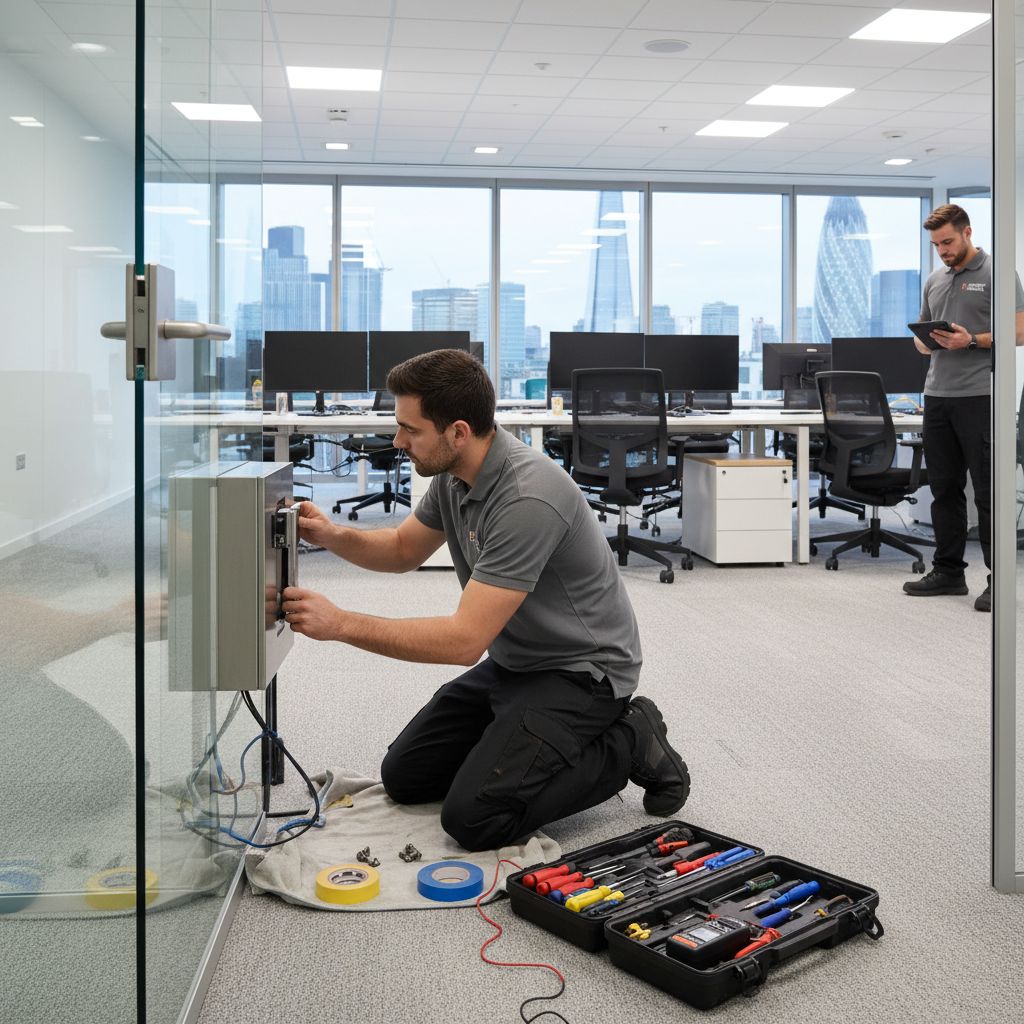
A new-build office with cabling runs already in place is straightforward to wire. A listed building, a site without existing structured cabling, or an outdoor installation requiring weatherproof hardware and cable runs through walls is considerably more involved.
Wired systems cost more to install than wireless alternatives but tend to be more reliable over the long term. This is worth discussing with your installer before committing to a system type.
Location in the UK
As with most trades, labour rates vary across the country.
A comparable installation in central London will typically cost 20–35% more than the same job in the Midlands, South Wales or the North of England. This is simply a reflection of engineer day rates and travel time, and it is worth factoring in when comparing quotes.
The Cost Most Installers Do Not Mention
This is the factor that makes the biggest difference to long-term cost, and it is rarely raised upfront.
Many of the most widely deployed access control platforms operate on a proprietary, recurring licence model. You pay for the hardware and installation, and then you pay annually to keep using the management software. These fees are typically structured as follows:
| Licence Model | Typical Annual Cost |
|---|---|
| Per door licence | £20–£100 per door per year |
| Per user licence | £10–£50 per user per year |
| Cloud subscription | £30–£200 per month |
To put that in context: a 10-door installation with 80 users on a mid-range proprietary platform can cost £1,000–£3,000 per year in software fees alone. Over a seven-year hardware lifecycle, that is £7,000–£21,000 on top of the original installation.
Open-architecture systems avoid this entirely. Controllers like Nortech’s DeltaQuest work with over 20 access control software platforms and carry no recurring licence fees from the hardware manufacturer. You own the system and choose your software.
It is worth asking any installer, before you commit: “Does this system charge ongoing licence fees per door or per user?” The answer will significantly affect what you actually spend over the lifetime of the system.
Real UK Installation Scenarios
To give a clearer sense of what all this means in practice, here are three typical UK scenarios and what they cost.
Scenario 1: 5-Door SME Office, 40 Staff
A two-storey office with a main entrance, rear fire exit, server room and two internal secure zones.
| Item | Cost |
|---|---|
| 5× encrypted HF RFID readers | £2,000–£3,000 |
| Access controller + cabling | £800–£1,200 |
| Installation and commissioning | £1,000–£1,500 |
| 40× MIFARE DESFire smart cards | £160–£320 |
| Access management software (open-arch) | £0–£500 |
| Total | £3,960–£6,520 |
Scenario 2: Logistics Site: Vehicle and People Access
A distribution depot with pedestrian door entry for 60 staff and a vehicle access lane at the main gate.
| Item | Cost |
|---|---|
| 4× encrypted HF RFID readers (pedestrian) | £1,600–£2,400 |
| 1× UHF vehicle reader + barrier | £3,500–£6,000 |
| Installation (both) | £1,500–£2,500 |
| 60× smart cards + 25 vehicle windscreen tags | £440–£740 |
| Total | £7,040–£11,640 |
Scenario 3: Multi-Site 20-Door Installation
A regional business with four sites, each requiring 4–6 doors on a single management platform.
- Hardware and installation: £12,000–£20,000
- Open-architecture software: £0–£1,500 (one-time)
- Proprietary software equivalent: £2,000–£6,000 per year, every year
The multi-site scenario is where open-architecture delivers the clearest long-term saving. Proprietary per-door licensing scales directly with door count, and the costs compound over time.
Ongoing Costs to Budget For
Beyond the initial installation, there are a few ongoing costs worth accounting for.
Credential replacement: staff turnover means continuous fob and card issuance. Standard proximity fobs cost £1–£3 each; encrypted HF smart cards cost £3–£8 each. A 10–15% annual replacement rate is a reasonable baseline for most organisations.
Maintenance contracts: annual preventive maintenance (reader tests, lock checks, software updates) typically costs £150–£400 per site per year. Skipping this tends to lead to avoidable failures.
System expansion: adding doors to an open-architecture system is straightforward. With some proprietary systems, expanding the door count triggers additional licence fees, which can make growth unexpectedly expensive.
Software upgrades: open-architecture systems allow software to be updated independently of hardware. With proprietary systems, major software upgrades sometimes require hardware replacement, accelerating a refresh cycle you would not otherwise need.

Frequently Asked Questions
How much does a single-door access control system cost in the UK?
A single-door access control system costs £300–£600 installed for a basic standalone key fob or proximity reader. A networked single-door system using encrypted smart card credentials costs £600–£900 installed, including reader, controller, cabling and commissioning. Biometric single-door systems start at around £1,000 per door.
What is the cost of access control per door?
For most commercial installations in the UK, access control costs £400–£900 per door for encrypted HF RFID reader systems. Basic proximity readers start around £300 per door. The per-door cost falls as scale increases: a 10-door installation costs considerably less per door than two separate single-door projects.
How much do access control software licences cost?
Proprietary access control software typically charges £20–£100 per door per year, or £10–£50 per user per year. For a 10-door, 80-user system, this adds up to £1,000–£3,000 annually. Open-architecture systems (which work with multiple software platforms) avoid these recurring fees. Over a seven-year hardware lifecycle, this difference can reach tens of thousands of pounds for larger installations.
What is the cheapest type of access control system?
A basic standalone PIN keypad or proximity reader costs £300–£600 per door installed and has no per-user credential cost. That said, the cheapest upfront option is not always the most cost-effective over time. Older 125 kHz proximity credentials offer no encryption and can be cloned cheaply. Encrypted HF RFID systems cost a little more upfront but significantly reduce security exposure.
How long does an access control system last?
Commercial-grade access control hardware typically has a 7–12 year operational lifespan. It is quite common to upgrade credentials (moving from 125 kHz proximity to 13.56 MHz encrypted) before replacing the readers or controllers. Open-architecture systems make this easier, because the software can be upgraded independently of the hardware, which extends the useful life of your investment.
Access control costs are highly site-specific, but the biggest long-term variable is often the one that gets the least attention during the sales process: software licensing. Specifying open-architecture hardware from the outset (rather than realising the issue after the system is in) avoids years of recurring fees and gives you flexibility as the technology and your organisation evolve.
If you want a straight assessment of what your site would actually cost (whether that is a single office door or a multi-site installation with vehicle access), talk to an engineer at Nortech. We have been specifying and installing access control across the UK for over 30 years and can give you an accurate scope without the sales process.
Elliot Blackler is a content specialist at Nortech Control Systems, working with the technical and sales teams to publish accessible guides on access control, vehicle identification, and security technology.