
Most gym operators thinking about access control start with the same question: key fobs or cards?
It is a reasonable place to start, but it is not the most important question. The decision that will affect day-to-day operations far more than credential type is whether your access control hardware integrates with your gym management software.
Get that wrong and you will spend years manually updating access permissions every time a member joins, cancels, or changes their membership tier.
Here at Nortech, we have been specifying access control for gyms and leisure facilities for over 30 years. In this guide we cover how gym access control works, what types of credential are available, what a proper software integration looks like, and what a UK installation actually costs.
How Gym Access Control Works
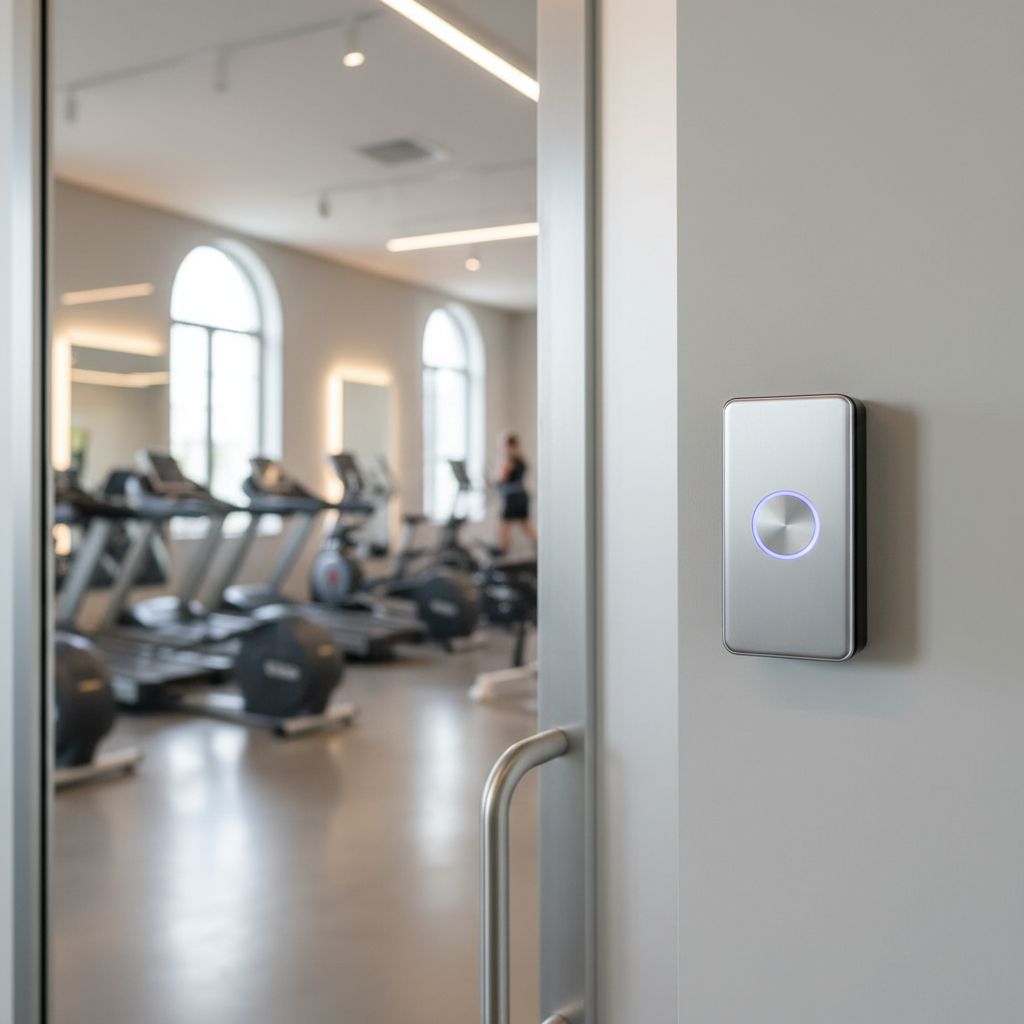
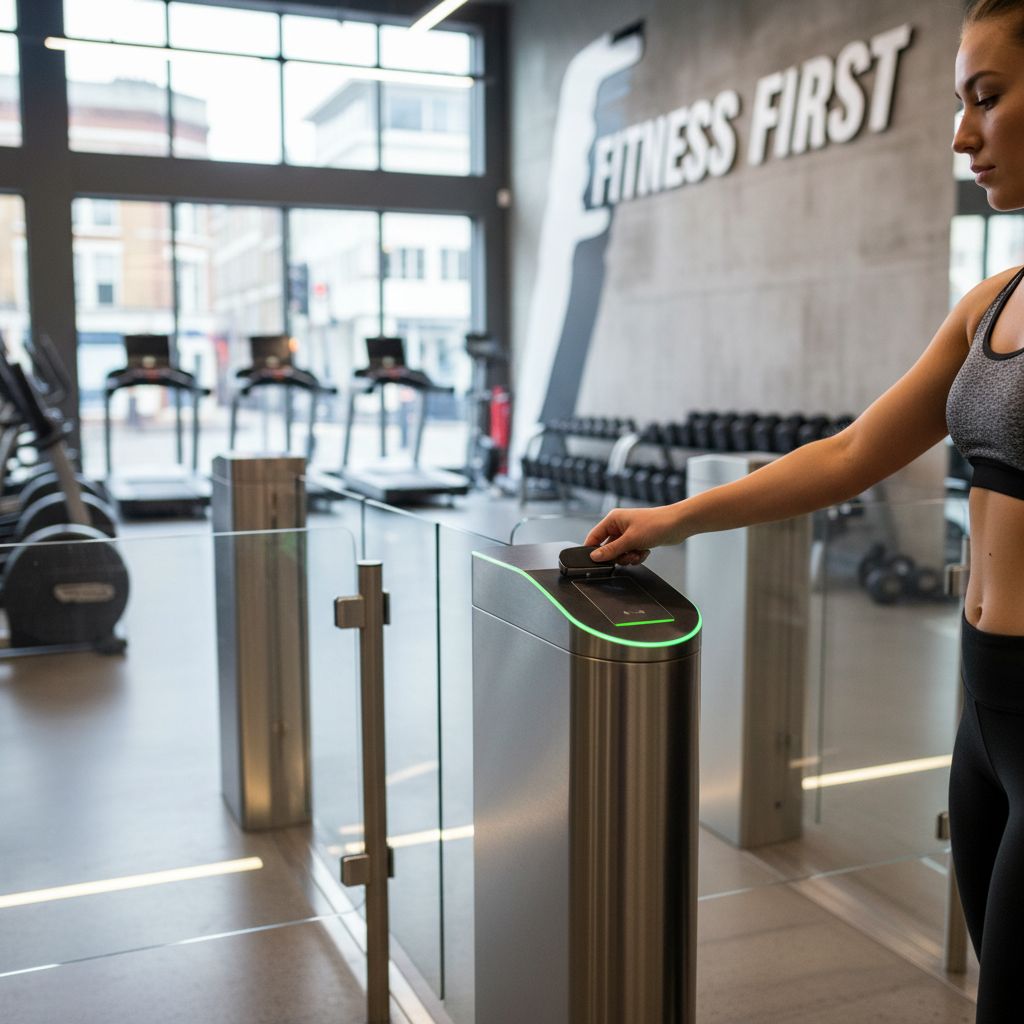
Gym access control is the system that decides who can enter your facility, when, and through which doors. No staff member needed at the entrance to check each person manually.
At its core, the system has three components: a credential (key fob, card, or smartphone), a reader at each entry point, and a controller that checks the credential against an authorised list and releases the door lock if access is granted.
The significant step up from basic door entry is the integration between the access controller and your membership database.
When a member’s subscription is active in your gym management software, their credential works. When they cancel or their payment fails, access is automatically revoked. No manual updates, no awkward conversations, no lapsed member slipping through.
That is what a properly integrated system actually does. It is why the software integration question matters as much as the hardware choice.
Types of Gym Entry Credential
There is no single right credential for every gym. The right choice depends on your security requirements, member demographics, and how much ongoing credential management you want to deal with.
Key Fobs
Key fobs are the most familiar format: a small plastic token on a keyring that members tap against the reader at the entrance. They are simple, durable, and easy for members to carry alongside their car keys.
Standard 125 kHz proximity fobs have no encryption. They can be cloned using a device available online for under £30, and they can obviously be lent to a friend. For a small single-site gym with modest security requirements, this may be an acceptable risk. For any site where membership fraud is a concern, it is not.
For a detailed explanation of the security difference between 125 kHz proximity and encrypted credentials, see our guide to proximity cards vs RFID.
Encrypted RFID Smart Cards
Encrypted smart cards (typically 13.56 MHz MIFARE DESFire) are the step up from basic proximity credentials. They use mutual authentication, meaning the reader verifies the card is genuine before granting access. Copying a DESFire card is not a practical attack; the encryption key is stored securely in the chip and never transmitted.
Smart cards can also store multiple applications on one credential: access control, cashless vending, class booking. This is useful for larger leisure facilities with multiple services to manage. The per-card cost is higher (£3-£8 versus £1-£3 for a basic fob), but the credential security is significantly better.
Mobile Credentials and NFC
Mobile credentials let members use their smartphone or smartwatch to enter the gym, typically using NFC access control. For many operators, particularly those running 24/7 unmanned facilities, this reduces the overhead of issuing and replacing physical tokens.
The trade-off is that it requires members to have their phone charged and on them, which is not always the case mid-workout. Most operators running mobile access do so alongside a physical credential option rather than as the sole method.
Biometric
Fingerprint or facial recognition readers eliminate credential sharing entirely. A member cannot lend their biometric to anyone.
The hardware cost is higher (from £800 per door) and there are GDPR obligations around storing biometric data that require a data protection impact assessment before deployment. Biometric access is more common in higher-security zones within a gym (a staff-only equipment room, a locker area with high-value items) rather than at the main entrance where throughput speed matters.
PIN Keypads
PIN entry is the simplest and cheapest option, but codes can be shared, observed, and are often not changed often enough. For any public-facing gym entrance, PIN-only access is difficult to justify once you have more than a handful of members.
Where PIN works well is as a secondary backup credential alongside a card or fob, which is useful if a member forgets their credential on a particular day.
The Integration Problem Most Gyms Don’t Anticipate
This is the issue we see most often in gyms that are unhappy with their existing access control setup.
Many access control systems, particularly those from larger proprietary vendors, are designed as closed platforms. They have their own software, their own management interface, and integrations with other platforms that are either unavailable or achieved through fragile API connections.
Those API connections break when either system updates. And when they break, you are back to manual updates.
For a gym running Perfect Gym, Glofox, Mindbody, ClubRight, or Xplor, this is a real operational problem. Every time a member signs up, cancels, or changes tier, someone has to update the access control system manually.
In a gym with significant monthly turnover, that is a continuous administrative burden. Miss an update, and a lapsed member keeps entry access.
The alternative is a controller that integrates directly with your gym management platform at the database level, so membership status changes instantly update who can enter through the door.
Nortech’s DeltaQuest controllers are built for exactly this. They integrate with over 20 gym and leisure management platforms including Perfect Gym, Glofox, LegitFit, ClubRight, Xplor, Mindbody, Exerp, and Gladstone. The integration is direct, not reliant on API middleware, which means access permissions update in real time.
There are also no recurring licence fees from Nortech for the hardware. Some proprietary access control platforms charge £20-£100 per door per year in software fees on top of the installation cost. On a 5-door facility over five years, that adds up to a significant additional spend that most operators do not anticipate when getting their initial quote.
What a Gym Access Control System Needs to Do
Beyond the credential and integration questions, here is what to look for when specifying a system for a gym or leisure facility.
24/7 operation: Many gyms now run unstaffed hours. The system needs to handle unattended entry reliably, with remote management capability so you can respond to issues without being on site.
Membership tier enforcement: Not all members should access all areas. The system should enforce different permissions based on membership level. A standard member can enter the gym floor; a premium member can also access the studio or swimming pool.
Visitor and guest access: Guest passes, day passes, and temporary credentials need to be manageable without significant administrative overhead. The ability to issue time-limited credentials, without needing to manually revoke them later, saves consistent staff time.
Audit trail: For any incident (a theft, an allegation, a safeguarding concern), a timestamped log of who entered which door and when is essential. Make sure the system retains sufficient history and that it is accessible when you need it.
Scalability: If you plan to open additional sites, the system should be able to extend to new locations without requiring a separate management platform for each one.
How Much Does Gym Access Control Cost?
Cost depends on the size of the facility, the number of entry points, and the credential type chosen. The table below gives a guide for typical UK gym installations.
| Scenario | Typical Cost (Installed) |
|---|---|
| Single-door standalone (key fob / proximity) | £300-£600 |
| 3-door networked system (encrypted RFID) | £1,500-£3,500 |
| 5-door gym with 200 members (encrypted RFID) | £3,000-£6,000 |
| 5-door gym with software integration (open-arch controller) | £3,500-£7,000 |
| Multi-site (10+ doors across 2-3 locations) | £8,000-£20,000+ |
These figures cover hardware, installation, cabling, and commissioning. Credentials are an ongoing cost on top: encrypted MIFARE DESFire cards run £3-£8 each; proximity fobs cost £1-£3. A 10-15% annual replacement rate is a reasonable planning figure for most gyms.
For a detailed comparison of access control costs across different building types and system scales, our UK access control cost guide covers the full picture.
The cost that catches operators off guard is software licensing.
If your chosen platform charges per door per year, a 5-door gym on a mid-range proprietary system can add £500-£2,500 annually in fees alone. Open-architecture hardware avoids this entirely. You choose your software, and the controller does not add its own recurring charge on top.

Frequently Asked Questions
What is the best type of credential for a gym access control system?
For most commercial gyms, encrypted RFID smart cards (13.56 MHz MIFARE DESFire) offer the best balance of security and convenience. They prevent credential cloning and sharing, can store multiple applications on one card, and are straightforward for members to use. Key fobs are simpler and slightly cheaper, but standard 125 kHz proximity fobs offer no encryption and can be cloned easily.
How much does a gym key fob system cost in the UK?
A basic standalone key fob system costs £300-£600 per door installed in the UK. A networked system for a 3-5 door gym (where all doors are managed from a single platform and credentials can be issued and revoked centrally) typically costs £1,500-£4,000 installed. Credentials add an ongoing cost: proximity fobs cost £1-£3 each; encrypted smart cards cost £3-£8 each.
Can gym access control integrate with gym management software?
Yes, and this integration is one of the most important decisions when specifying a system. When access control is directly integrated with your gym management platform, membership status changes automatically update access permissions with no manual intervention required. Open-architecture controllers like Nortech’s DeltaQuest integrate with over 20 gym management platforms including Perfect Gym, Glofox, ClubRight, Xplor, and Mindbody.
Why do gyms use key fobs instead of cards?
Key fobs are popular because they are compact, durable, and easy to carry on a keyring alongside car keys and house keys. They require no wallet or bag to access and hold up well to the environment of a gym bag. For gyms using standard 125 kHz proximity technology, fobs and cards are functionally identical: both transmit an unencrypted ID to the reader. The physical format choice is usually driven by member preference rather than any technical difference.
How do gyms handle 24/7 unmanned access control?
Unmanned 24/7 access relies on a combination of reliable reader hardware, encrypted credentials to prevent unauthorised entry, and remote management capability so operators can monitor and respond to access events without being on site. Access permissions are typically enforced by integration with the gym management platform: a member whose payment has failed cannot enter. Most operators running 24/7 facilities also use CCTV at entry points to maintain a visual audit trail alongside the access log.
Getting the credential type right is a good start. Getting the software integration right is what determines whether the system actually saves you time or creates more administration.
If you are specifying access control for a gym or leisure facility and want to understand which controller will integrate properly with your existing management platform, talk to an engineer at Nortech. We have been working with gym and leisure operators across the UK for over 30 years and can give you a straight assessment of what will work for your site.
Elliot Blackler is a content specialist at Nortech Control Systems, working with the technical and sales teams to publish accessible guides on access control, vehicle identification, and security technology.