
Gone are the days when manned gatehouses were the only solution for managing people and vehicles access to the premises.
Automated barrier systems can now do most of what a manned gatehouse did: identify the vehicle, decide whether it is allowed in, open the barrier and keep a record.
The costs of security guards at gatehouses continue to rise and put more pressure on companies to find new ways of eliminating unwanted costs and improving their ROI.
An automated barrier gate system provides the same advantages as a manned gatehouse station at a fraction of the cost, with an added benefit of efficiency and enhanced workflow.
What is an Automated Barrier Gate System?
Automated gate barriers are an increasingly popular solution for a diverse range of traffic access and parking solutions, commonly used in residential, commercial and industrial parking applications.
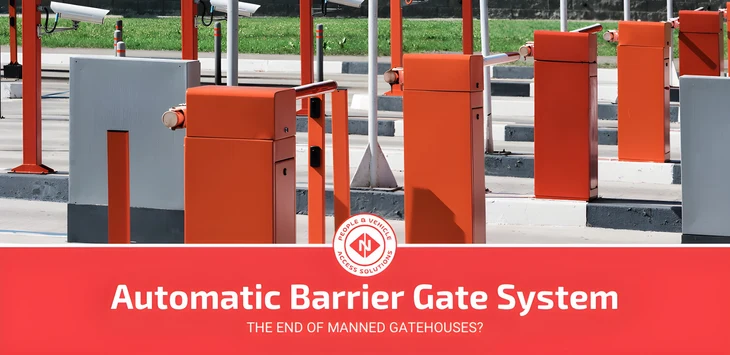
An automated gate system typically includes a combination of automatic barriers and bollards that are connected to a vehicle access control system so that vehicles enter and leave without stopping. Technologies such as ANPR and long-range RFID enable these systems to identify vehicles automatically without drivers needing to stop or present credentials.
On top of that, automated barrier systems can also be connected with variable message signs to help control the flow of traffic and improve car park management.
This is especially common for large shared car parks such as supermarkets, corporate parking facilities, airports, retail shopping centres etc. that need an effective system to help signal when a car park is full or direct vehicles already in the car park to available spaces. For a broader look at how these technologies protect parking areas, see our guide on car park security.
Read Our Report: Key Technologies Shaping Vehicle Access Control (2021 Update)
Gate barrier systems are of course nothing new, with manned gatehouses being common-sight across corporate and industrial locations. Several access control technologies can drive an automated barrier; we compare keypads, proximity cards, long-range RFID and ANPR later in this guide.
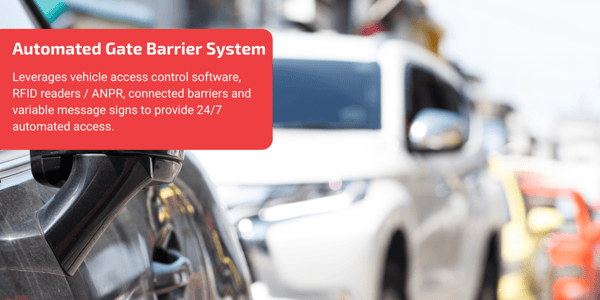
However, the introduction of vehicle access control software and automated barriers has enabled businesses to build a 24/7 secure vehicle access point without the need for a manned gatehouse.
But why would we want to remove the need for manned gate houses?
The Pitfalls of a Manned Gate House
Personnel Costs
The most obvious cost is staff. A gatehouse manned around the clock is three or four salaries a year, spent on a job that a barrier, a reader and a controller can do.
So, why spend all this money for manned gatehouses when long-range solutions are an effective and cost-efficient alternative?
Human Error
Security guards at gatehouses are vulnerable to fatigue, missed threats, not to mention lack of concentration, distractions and unplanned absences. Guards can’t be alert 24/7 and there are endless factors that can affect their performance at work, making it easier for unauthorised people to access the premises.
Staff Shortages
Gatehouse staffing is fragile. Illness, holiday and turnover can leave a security post empty without warning, forcing organisations to search for temporary or part-time workers to fill the gaps, as the pandemic demonstrated at scale.
Temporary cover also costs more and can lack site-specific experience, leaving the premises most vulnerable exactly when cover is thinnest.
Time is Money
Manned gatehouses are mainly used to heavily process a large flow of visitors and vehicles. This often includes a lot of manual work such as checking the vehicle number plate and driver’s ID to make sure that they are authorised to enter the premises. All this takes time, and can lead to unnecessary congestion at the premises entry and exit gates.
Busy premises such as warehouses, airports, seaports, military bases, utility companies, corporate and educational campuses, and police need a solution that will enable them to access the premises without having to stop at the gate and wait for a security guard to grant them access to the site.
Choosing the Gate Access Control Technology
An automated barrier is only half of the system. The other half is the gate access control technology that decides which vehicles the barrier opens for.
There are four main options, from a simple keypad to fully hands-free vehicle identification:
PIN Keypads
The simplest and cheapest option: the driver stops at the barrier and keys in a code. PINs can be shared or observed though, and the stop-and-type delay causes queues at busy entrances during peak times.
Proximity Cards and Fobs
The driver presents a card or fob to a reader mounted at the barrier. Faster than a keypad and nothing to forget, but the driver still has to stop and lower their window to badge in.
Long-Range RFID
A tag on the vehicle (windscreen-mounted or heavy-duty) is read at 5 to 10 metres, so the vehicle is identified as it approaches the control point. The barrier is open by the time the vehicle reaches it: no stopping, no window down.
This ‘hands-free’ approach is a form of automatic vehicle identification, and it is the technology behind the TRANSIT solution covered below.
ANPR
ANPR cameras read the vehicle’s number plate on approach and check it against an authorised list, converting valid plates into standard Wiegand format ID numbers for the access control system.
Because the plate itself is the credential, nothing needs to be issued to the driver at all. With a read range of up to 10 metres and deep-learning plate reading, ANPR suits sites with visitors, contractors or temporary access where issuing tags is not practical.
Which Option Fits Your Site?
| Technology | Driver stops? | What is issued | Best for |
|---|---|---|---|
| PIN keypad | Yes | A code | Low-traffic sites, tight budgets |
| Proximity card/fob | Yes | Card or fob | Small staff car parks |
| Long-range RFID | No | Vehicle or driver tag | Fleets, staff, high-throughput sites |
| ANPR | No | Nothing: the plate is the credential | Visitors, mixed traffic, temporary access |
For sites processing a steady flow of known vehicles, long-range RFID delivers the fastest, most secure throughput, which is why it is the option we recommend most often.
The Ultimate Solution: TRANSIT and Booster Tags
So, what is the best, cost-effective solution that will help you to automate your people and vehicle identification and avoid the issues associated with manned security gatehouses?
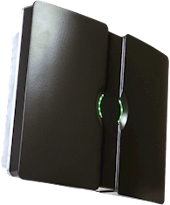
TRANSIT reader range from Nedap, along with accompanying long-range vehicle and driver identification tags, are a perfect solution for staff car parks, priority vehicle control, industrial site access control, fleet, parking management and more.
Here is how this long-range automated solution will help you to improve your ROI and future-proof your premises’ security and safety.
Simultaneous Driver and Vehicle Identification
The TRANSIT Prox Booster (120-125 KHz), SMARTCARD Booster (13.56MHz) and SMARTCARD Booster Ultimate (2.45GHz and 433MHz) enable long range, driver-based identification. Driver based ID systems, comprising of an access card and in-vehicle booster, ensure that a vehicle can never gain access to a secured area unless occupied by an authorised driver.
The booster is used in combination with a personal access credential and is an easy way to integrate solution for vehicle access, eliminating the need to issue new cards.
The booster is placed on the windshield on the inside of a vehicle. When an authorised building access card is inserted into the booster, it is read and then boosted to the external Nedap TRANSIT reader.
The TRANSIT reader then transmits the credential ID to any standard back end security panel. If the credential is authorised and access is granted the gate will open automatically. Removal of the driver ID then allows the access card to be used for building access.
This way your premises AND your building is secured with one simple solution.
Improved Visitor Flow
As TRANSIT grants access to authorised vehicles at a reading distance of up to 10 metres, drivers don’t have to wait at the gates to get access to the building. During peak times, an automated solution like this reduces traffic and improves the overall workflow.
Reduced Vehicle Theft
Vehicle theft went through the roof by up to 60% in the UK between 2016 and 2019, and it keeps rising. With solutions like TRANSIT and booster tags, it will be practically impossible to steal vehicles from premises, as the vehicle simply won’t be granted exit without the accompanying ID card.
Access To Important Data Points
Organisations will also have access to detailed reports providing information on visitors and their flow within the premises and the building. This data helps security managers to be more proactive in their efforts, and effectively monitor on site security levels, and respond quickly when the need arises.
All in all, TRANSIT, accompanied with booster tags, can be an invaluable solution for augmenting on site security and safety, whilst also replacing existing manned gatehouses, and deliver a proactive threat prevention.
Success Story: TRANSIT Ultimate Gives Express Parcels the Edge
The Express Parcel Services site has previously been secured with CCTV and a cantilever sliding gate system that was manned by security guards. EPS required a system that allowed them to reduce guarding hours and to replace the sliding gates with something that operates much faster to speed up vehicle entry and exit and avoid tailgating. The new system would also be required to identify vehicles and log their entry and exit back to a centrally managed software system.
On the advice of Nortech Control’s technical team, it was decided that the installation of Nedap Transit Ultimate RDIF Readers linked to Nortech’s NorPass3 Access Control Software would overcome the challenges presented on this site.
This solution helped EPS to achieve the following:
- Faster and secure vehicle identification
- Reduced manning requirements as a result of fully automated vehicle detection and validation
- Improved flow of traffic whilst maintaining site security
- Automatic logging of vehicle movements